How Owners Accidentally Train Employees to Wait, Ask, and Depend on Them
The Complaint I Hear From Owners
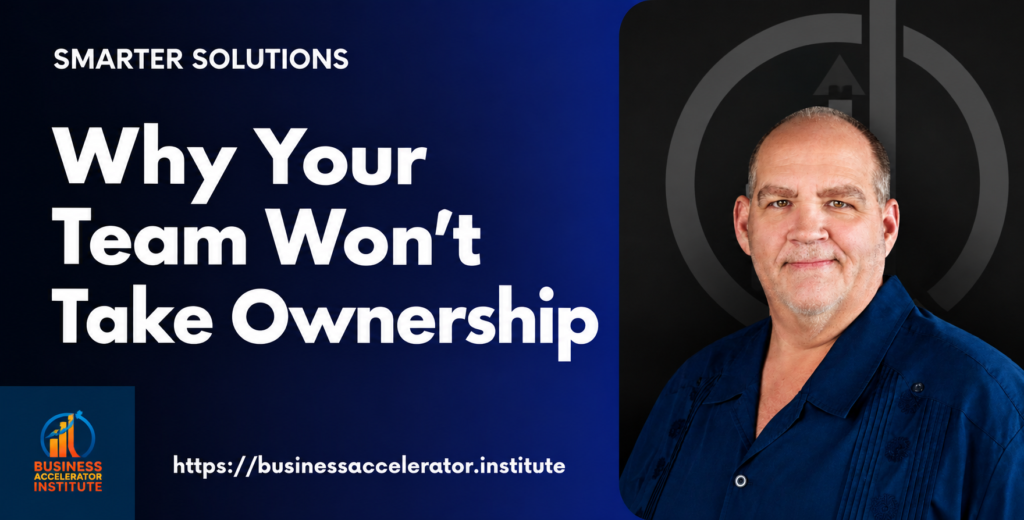
“My people just won’t take ownership.” It is one of the most common frustrations I hear from business owners. They have hired capable people, delegated responsibilities, and created procedures. Yet questions, approvals, and judgment calls still find their way back to the owner. The natural conclusion is that the team lacks initiative. Sometimes that is true. But before blaming the team, there is a harder question worth asking: What if the owner trained them to behave that way?
What You Tell People Is Not Always What You Train Them to Do
An owner may tell employees to make decisions, then change those decisions. The owner may say “take ownership,” then immediately reclaim responsibility after a mistake. An employee may bring a problem and receive the answer before finishing the explanation. Over time, the lesson becomes clear: when something matters, ask the boss. That is how a business can unintentionally reward dependency while verbally asking for ownership.
The Chief Problem Solver Trap
Early in a business, the owner often is the best problem solver. That strength helps the company survive. But if every unusual situation, upset client, spending decision, or judgment call continues to return to the owner, the organization learns one operating principle: when you are uncertain, go find the owner. Eventually the owner becomes frustrated that nobody can make a decision without them. The Owner Trap™ question is uncomfortable but necessary: Who taught them that?
Develop Problem Solvers, Not Problem Bringers
In my law firm, I wanted people to bring thinking with the problem. When someone asked, “What should I do?” one of my first questions was, “How would you handle it?” If they did not know, I sent them back to think and return with a recommendation. If they were right, I told them to proceed. If they were close, I coached the gap. Over time, people stopped bringing only problems and started bringing proposed solutions. I was no longer just solving problems; I was developing problem solvers.
Responsibility Is Not Ownership
Ownership is not simply completing a list of tasks. Ownership means being responsible for an outcome. To create real ownership, the employee needs a defined result, a system, training, standards, appropriate authority, and a way to measure success. If you hold someone accountable for a result while withholding the authority required to produce it, you have created frustration, not ownership.
Mistakes Are Part of Developing Judgment
Giving people authority means they will sometimes make decisions differently than you would. They will also make mistakes. The goal is not an organization in which nobody ever makes a mistake; that is impossible. The goal is an organization that learns from mistakes. If the first mistake causes the owner to grab responsibility back, the team learns that initiative is dangerous. The better response is to ask how the decision was made, whether the system was followed, what information was available, and what should change next time.
Three Decision Boundaries
Employees should not have to guess what they can decide. Define three categories: 1) You can decide — no approval is required. 2) Decide and notify — make the decision and tell leadership afterward. 3) Get approval — higher-risk, legal, financial, personnel, or out-of-role decisions require leadership involvement. Clear boundaries reduce unnecessary questions while protecting the business where owner involvement truly matters.
Accountability Is Not Micromanagement
Micromanagement watches every move. Accountability agrees on what success looks like and measures the result. When the owner can see the numbers, outcomes, and reporting, the owner does not need to stand over someone’s shoulder. Good accountability actually makes it easier to back away because trust is supported by clarity and evidence.
The Identity Problem Beneath Dependency
There is also a deeper issue. Sometimes being needed feels like being important. Clients want the owner. Employees ask for the owner. Decisions wait for the owner. For someone who built the business from nothing, that dependence can become part of identity. But being needed and being valuable are not the same thing. The owner’s highest value may be creating an organization in which fewer questions need to reach the owner.
Faith and Leadership: Equip People
Ephesians 4 uses the language of equipping people for works of service. The leadership principle is powerful: equipping is different from doing everything for someone. To equip is to teach, develop, prepare, provide tools, and then allow people to use them. Leadership is not proven by how dependent people are on you. It is demonstrated by what people become because you led them well.
This Week’s Leadership Challenge
For the next week, when someone brings you a problem they are capable of thinking through, resist the urge to answer immediately. Ask, “How would you handle it?” Then listen. Coach the thinking instead of replacing it. It may take five minutes instead of thirty seconds today, but that investment can eliminate the same question tomorrow, next week, and next month.
Perspective Shift™
If you want people to take ownership, you have to stop rewarding dependency.
Question to Carry Forward
What is one problem your team keeps bringing back to you that you need to stop solving for them—and what do you need to teach, clarify, systematize, or authorize so they can own it without you?